
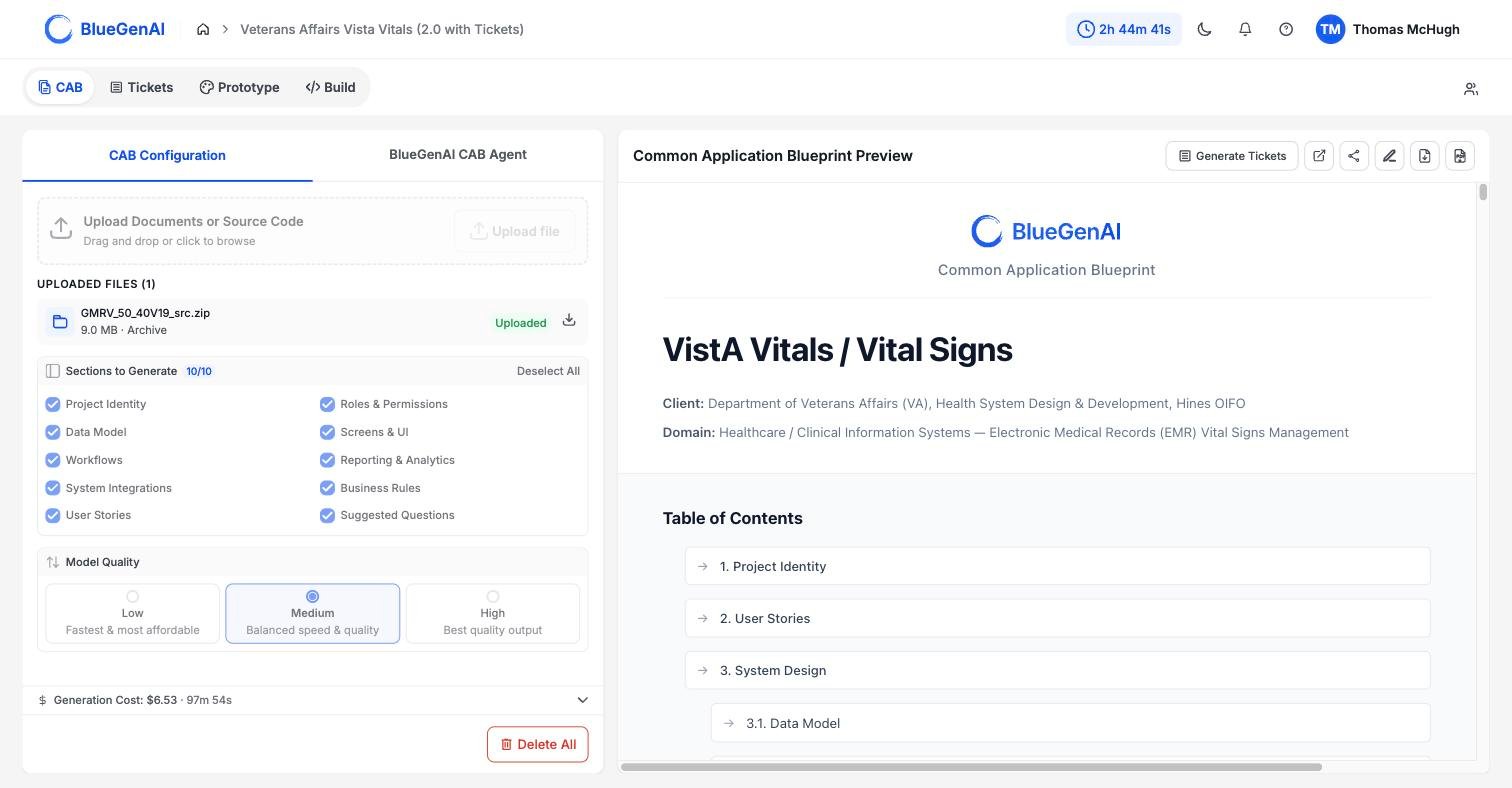
Suggested Questions is the tenth item in the section checklist. Deselecting it removes the appendix from the generated document.
How the Questions Are Found
As CAB analyzes your uploaded materials, they are examined for gaps. For example, one portion of the code might flag an undefined approval threshold, another may identify the same threshold in a different document. Those separate findings are then reconciled in one pass over the whole set. That pass does three things worth knowing about.- It merges duplicates. A gap flagged in four documents becomes one question, not four.
- It ranks by impact. The questions that most affect what gets built appear first, so the list is in the order you should work through it.
- It combines context. Where several documents touch the same gap, the question carries what each of them said. If a question can be resolved by the CAB AI, it will do so before producing the final output.
What Each Question Carries
The suggested options are what make this usable in a meeting. A question with two or three concrete choices attached moves faster than an open one, because a stakeholder is picking rather than composing.
What It Looks For
Here are examples of the types of gaps most commony identified by the CAB generation process:Working Through Them
The list is ordered by impact, so take it in order. For each question, the useful output is a decision, not a discussion; the suggested options exist to get you one. Answers go back into the blueprint through the normal editing route, either directly or by asking the CAB agent. See Editing your CAB.A Note on Completeness
The questions come from what the platform read. A gap it did not recognise as a gap does not appear, and neither does anything your source material never touched on. Treat the list as a strong starting agenda rather than an exhaustive audit of your requirements.Your Next Step
Answering these questions changes the blueprint, and every change goes through review before it lands.Fold the answers back into your blueprint
How manual edits and AI-suggested changes are reviewed and applied.
See where the answers land
What each of the 10 sections tells you about your application.