
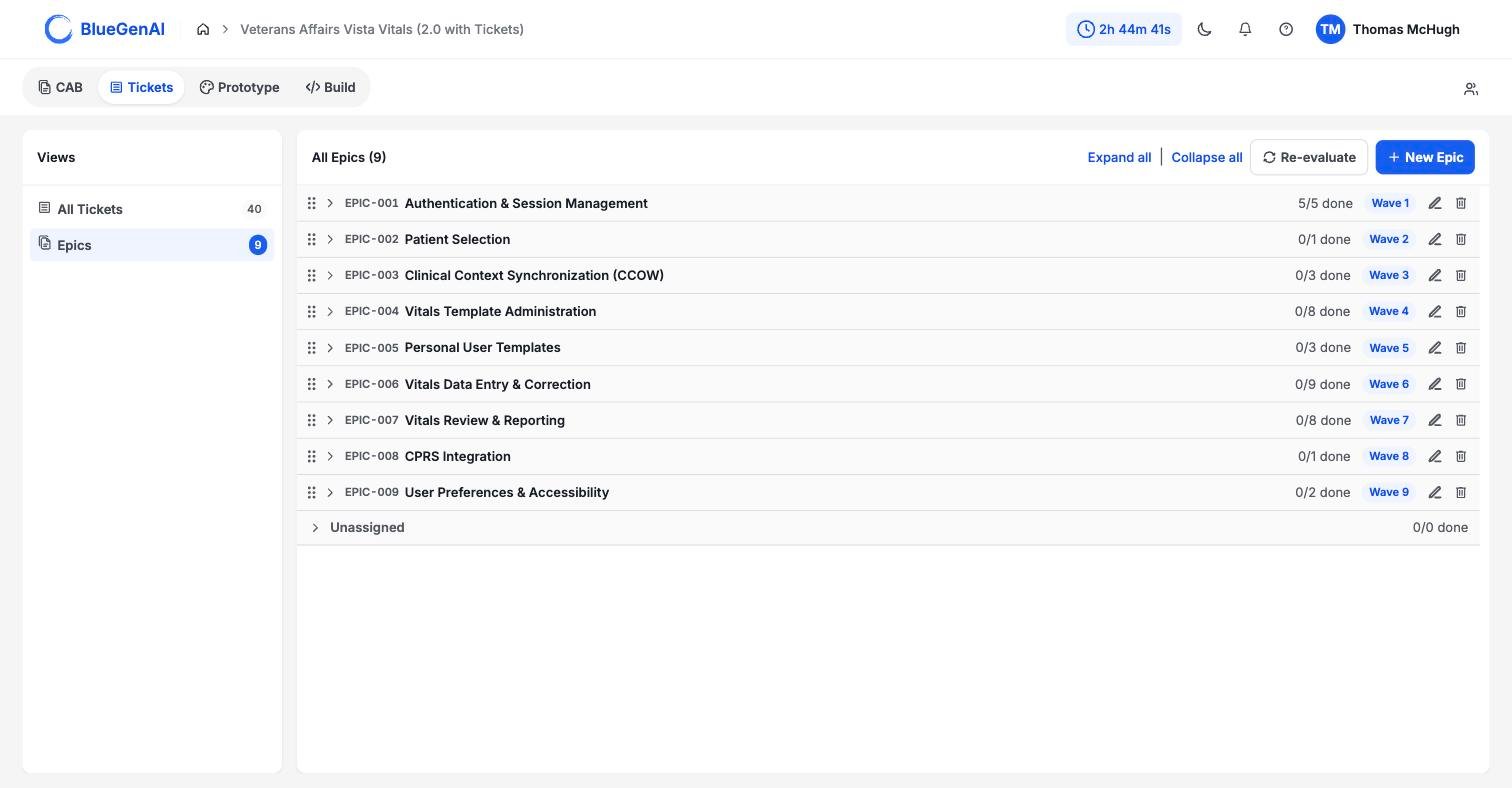
The Epics view. Each row shows a stable id, the name, progress, and the wave badge marking its position.
Epics and Waves
Epics are groups of Tickets while Waves are the order of work. An Epic is the group. Its position in the build order is its Wave. The first Epic to be worked is Wave 1. By default, Epics and Waves will have the same number. Epic 1 will be Wave 1. However user’s have the ability to manually re-order Epics to perform the work as desired. When an Epic is moved to a different order, the Wave it corresponds to will be moved. If Epic 3 is moved to the top, it will become Wave 1 while still being named Epic 3. The Tickets list and the detail panel show Epic and Wave as separate fields, which makes them look like two things you set. You only ever set one. Move an Epic up or down and its Wave follows automatically; reorder the list and every Wave renumbers to match. There is no way to manually give a Ticket a Wave without putting it in an Epic.If you are reading a Ticket and wondering which field to change, the answer is neither. Wave is a readout of where its Epic sits. Move the Ticket to a different Epic, or move the Epic itself.
Reading an Epic Row
At the bottom sits an Unassigned row holding Tickets that belong to no Epic. It has no id, no wave badge, and no edit or delete controls, because it is a bucket rather than an Epic. The count in the header excludes it.
Working with Epics
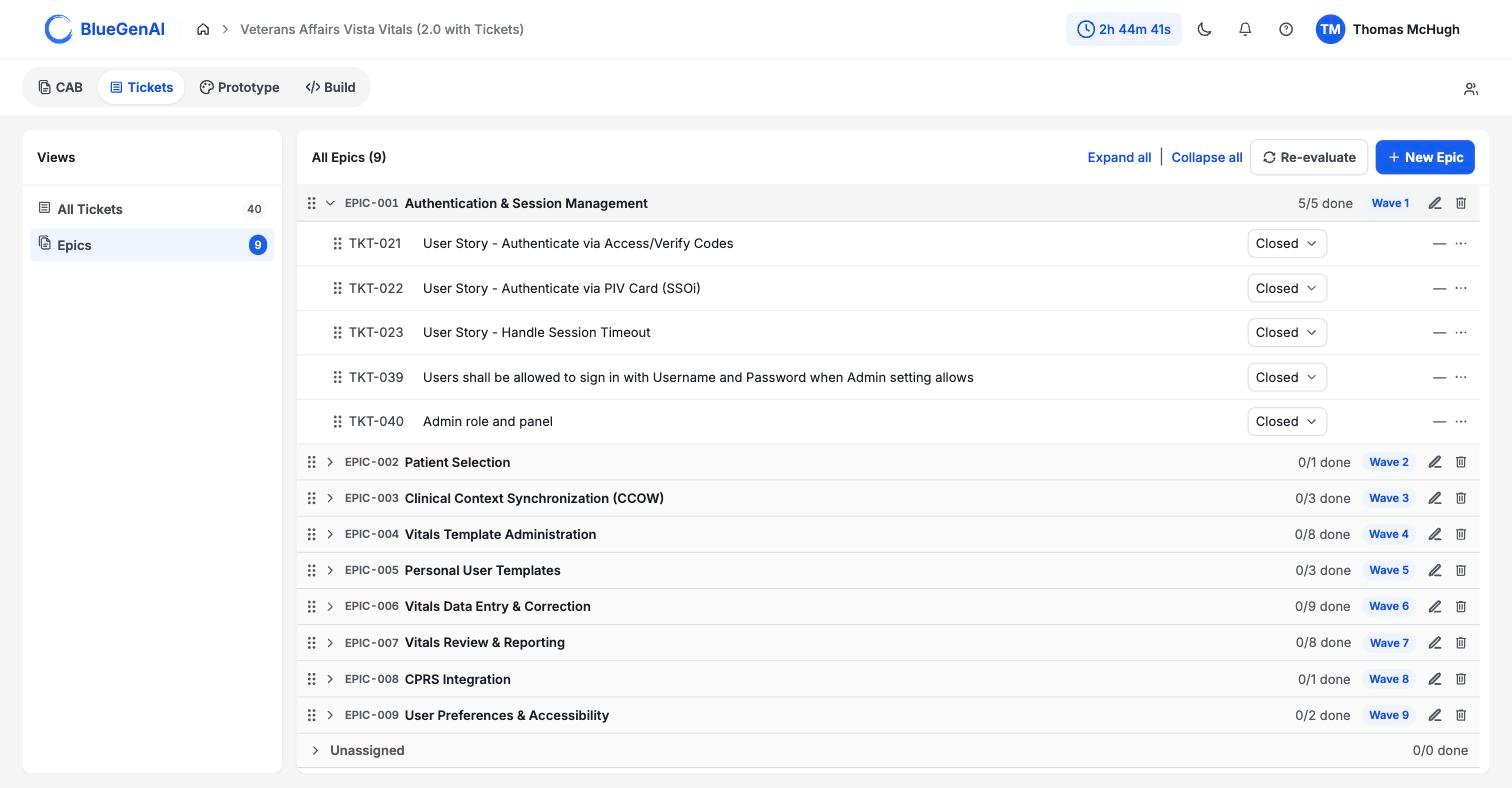
An expanded Epic. The overflow control on each Ticket row opens a searchable picker for moving it to another Epic.
Moving a Ticket between Epics is done through the overflow control on its row, which opens a searchable list of every Epic. Deleting an Epic does not delete its Tickets. They fall back to Unassigned and the remaining Waves renumber.
Re-evaluate Build Order
This is the most destructive control in Tickets. It deletes every Epic and rebuilds the whole grouping from scratch using AI. Use only when you are confident a comprehensive re-work is warranted.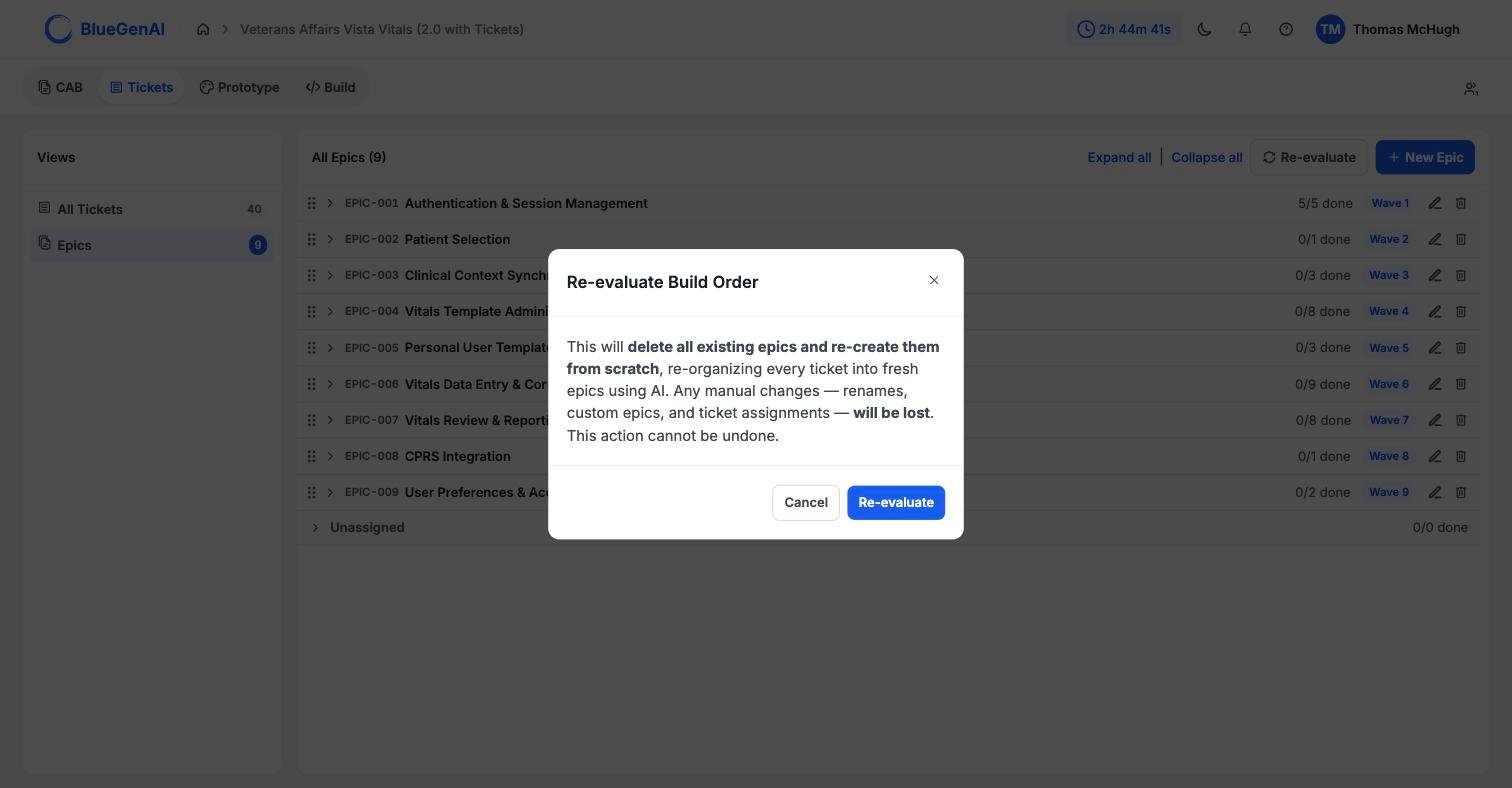
The Re-evaluate confirmation names exactly what is lost.
Your Next Step
With work grouped and ordered, a Ticket can be handed to the build agent.Build from a Ticket
Referencing a Ticket in a Build conversation, and what context comes with it.
Adjust individual Tickets
Editing, reassigning, and deleting Tickets by hand.