Two panels let you inspect what the agent built: Codebase for the source tree, Database for the data behind it.

Codebase

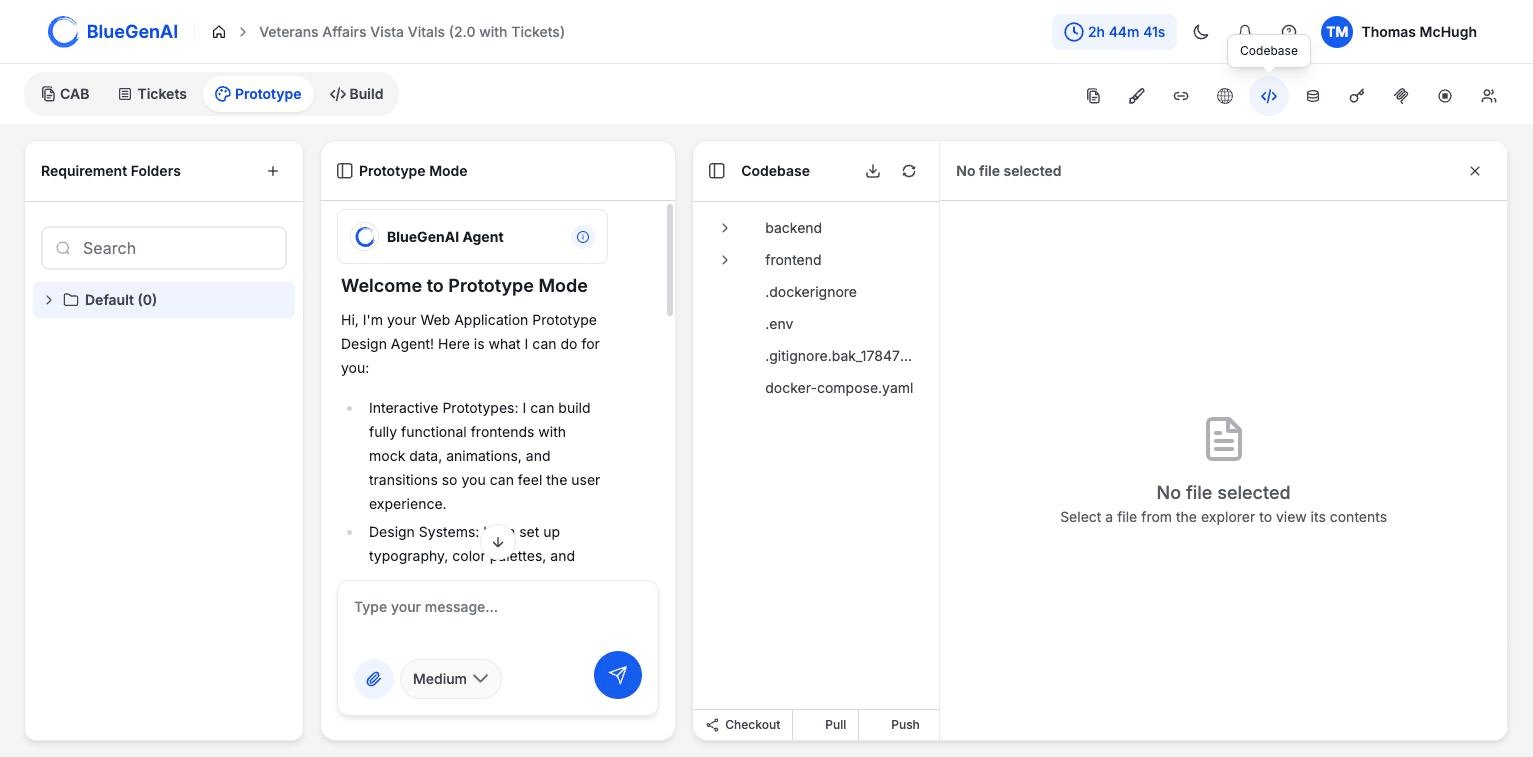
The Codebase panel showing a file tree containing backend, frontend, dockerignore, env, gitignore backup and docker-compose entries, beside an empty file viewer reading No file selected, with Checkout, Pull and Push controls in the footer.

The Codebase panel. The tree is on the left, the file viewer on the right, and the Git controls sit in the footer.

The tree shows the project as the agent built it. Selecting a file opens it in the viewer; until you do, the viewer reads No file selected. The header carries a download control and a refresh control. The footer carries Checkout, Pull, and Push; see Git Integration.

Database

The Database Viewer has two modes, selected by a toggle in its header.

Browse

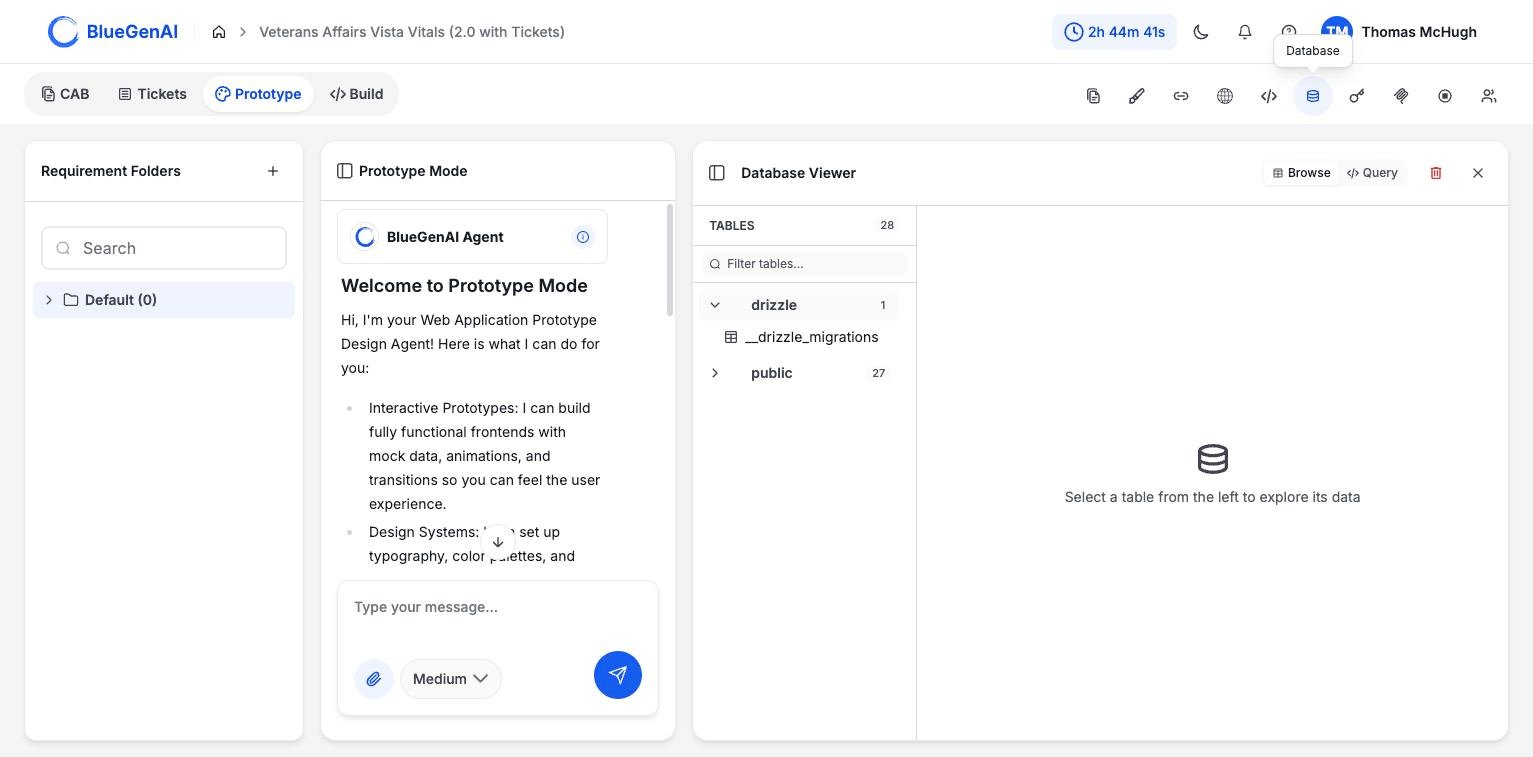
The Database Viewer in Browse mode showing a TABLES heading with a count of 28, a filter field, and a schema tree listing drizzle with one table and public with 27, beside an empty state reading Select a table from the left to explore its data.

Browse mode before a table is selected. Schemas and their table counts are on the left.

The left column lists schemas and their tables with a count, filterable by name. Selecting a table shows its rows. The drizzle schema holds the migration bookkeeping the ORM maintains. Your application’s own tables are in public.

Query
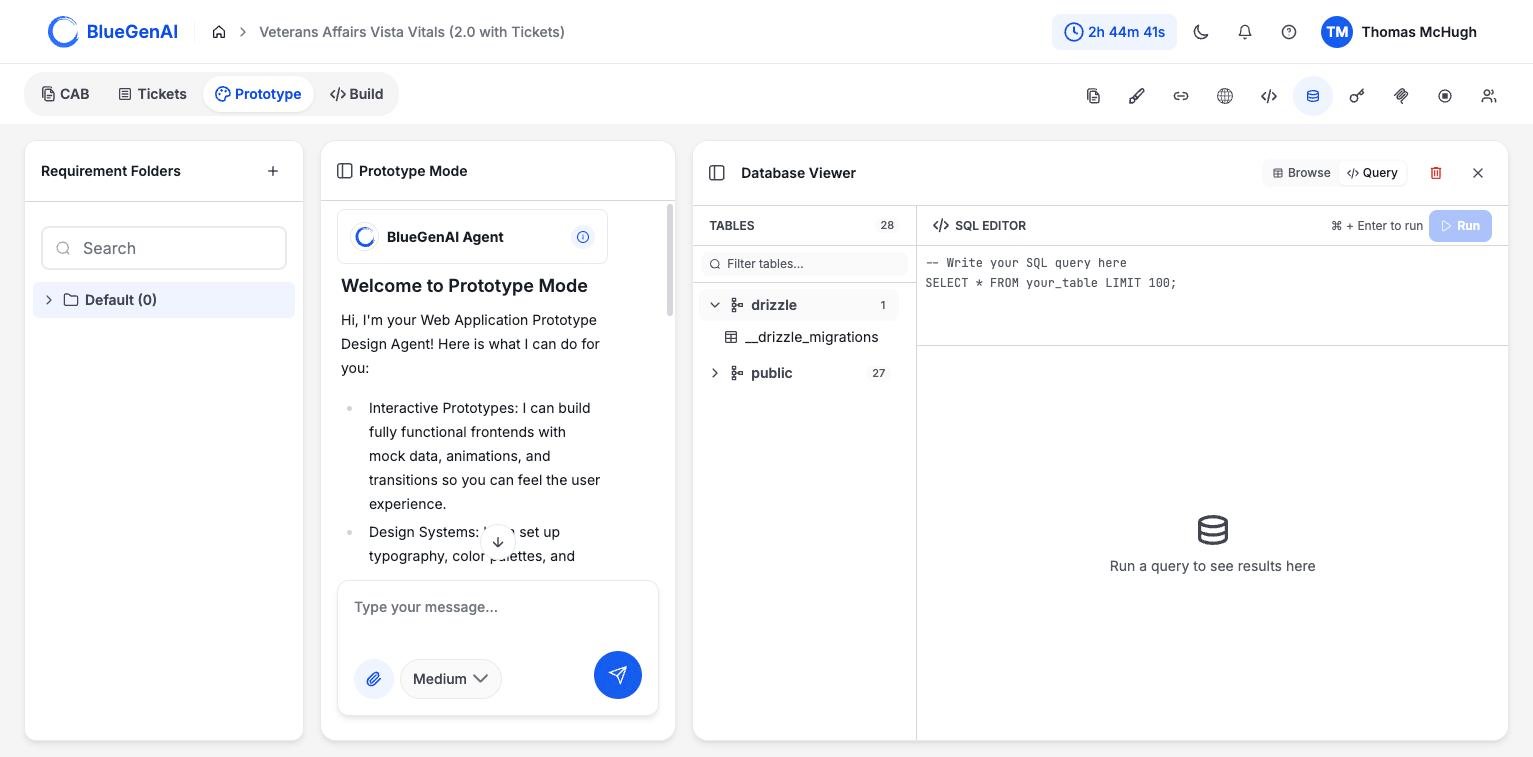
The Database Viewer in Query mode showing a SQL EDITOR heading, a keyboard hint reading command plus Enter to run, a disabled Run button, an editor containing a commented template with a SELECT statement, and an empty results area.

Query mode. The editor is pre-filled with a template, and Run stays disabled until you write something.

The editor runs SQL against the application database. It opens with a template, and the results area reads Run a query to see results here until you run something. ⌘ + Enter runs the query.

Deleting the Database
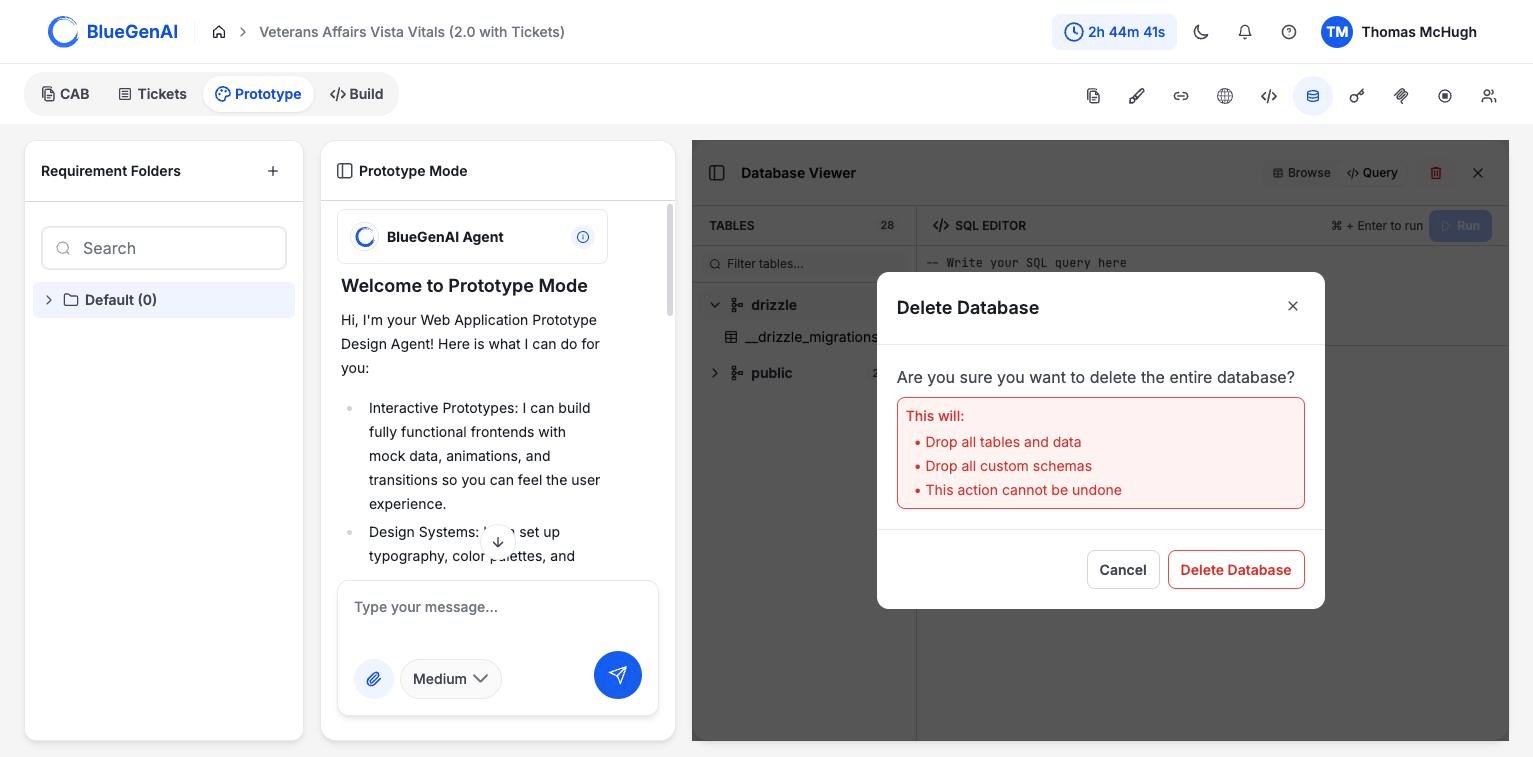
The Delete Database confirmation asking whether to delete the entire database, with a red-bordered box listing that it will drop all tables and data, drop all custom schemas, and that the action cannot be undone, above Cancel and Delete Database buttons.

The delete confirmation lists exactly what is dropped.

Deleting the database drops every table, all data, and any custom schemas. It cannot be undone, and it does not remove the code that expects those tables to exist.

When Something Is Not Available

If the connection is unavailable, start the application and let its health checks pass before retrying. See Deployment Guide.

Your Next Step

Reading the code is one way to check the agent’s work. Asking it to explain itself is another.

Ask about the code instead of reading it

A read-only mode that traces behaviour and cites its evidence.

Push the code to a repository

Checkout, pull, and push from the Codebase panel.